The ESTIV Members Area
As we prepare for the 23rd ESTIV Congress in Maastricht in 2026, we found ourselves looking back at the remarkable history of our community.
Many people know that the European Society of Toxicology In Vitro (ESTIV) was formally established in 1994. What is less widely known is that the roots of ESTIV go much deeper.
The story began in 1980 with the first European meeting dedicated to the application of tissue culture in toxicology in Soesterberg, The Netherlands. Over the following years, scientists from across Europe gathered regularly in Sweden, Italy, the United Kingdom, Germany, France, Belgium and other countries, united by a shared vision: developing better, more human-relevant approaches to safety assessment.
These pioneering meetings, together with initiatives such as the INVITTOX network, helped build a vibrant European community of researchers committed to advancing in vitro toxicology and reducing reliance on animal testing.
In 1994, this growing community took an important step forward with the formal establishment of ESTIV. Since then, the Society has continued to grow, evolve and lead scientific progress—from in vitro toxicology to today’s New Approach Methodologies.
Looking at the map of past congress locations, we are reminded that ESTIV is more than a scientific society. It is a community built over decades by generations of dedicated scientists, regulators, educators and innovators.
From Soesterberg in 1980 to Maastricht in 2026, and the journey continues….where should we meet in 2028? Bring your ideas to the General Assembly of the ESTIV Society on June 30, 2026!
*************************************************************************************************************************************************************
ESTIV Congresses
The European Society of Toxicology In Vitro (ESTIV) organises a congress every 2 years to promote the development of in vitro and in silico approaches. The ESTIV congress aims to create a forum of scientists in a unique atmosphere for discussions and the exchange of knowledge. The objective of the congress is also to promote contact between junior and senior researchers, students, and toxicologists from European companies, governments, and universities involved in the development and use of in vitro and in silico approaches. It serves as a vital platform for fostering collaborations, exchanging ideas, and discussing the future direction of toxicology with an emphasis on reducing animal testing.
The congress aims to:
- Showcase the latest scientific advancements and innovations in the field.
- Facilitate discussions on regulatory acceptance and implementation of new testing methods.
- Provide networking opportunities for professionals across academia, industry, and regulatory bodies.
- Encourage the integration of in vitro and in silico methods into toxicological research and safety assessments.
- Promote education and training in the latest toxicological techniques and models.
Key Features
- Plenary Sessions: Led by distinguished speakers, these sessions cover groundbreaking topics and global trends in toxicology.
- Symposia and Workshops: Focused on specific areas of interest, offering in-depth discussions and hands-on learning experiences.
- Poster Sessions: An opportunity for researchers to present their work and receive feedback from peers and experts.
- Exhibition: Showcases the latest technologies, products, and services from companies and organizations in the field.
- Networking Events: Facilitates connections and collaborations among attendees from diverse backgrounds and expertise.
Impact and Importance
The ESTIV Congress is crucial for advancing the field of toxicology towards more ethical, accurate, and cost-effective methods of testing. It plays a significant role in:
- Encouraging the adoption of non-animal testing methods across various industries and regulatory frameworks.
- Highlighting the importance of in vitro and in silico methods in the context of human health and environmental safety.
- Fostering a global community of toxicologists committed to innovation and the application of new approach methodologies (NAMs).
Past ESTIV Congresses
1980: Soesterberg, The Netherlands
1982: Hasseludden, Sweden
1984: Urbino, Italy
1986: Crieff, United Kingdom
1988: Schloss Elmau, Germany
1990: Seillac, France
1992: De Haan, Belgium
1994: Karthauseen Ittingen, Switzerland
1996: Papendal, The Netherlands
1998: Sparsholt, United Kingdom
2000: Pueblo Acantilado, Spain
2002: Formia, Italy
2004: Zegrze, Poland
2006: Ostend, Belgium
2008: Stockholm, Sweden
2010: Linz, Austria
2012: Lisbon, Portugal
2014: Egmond aan Zee, The Netherlands
2016: Juan-Les-Pins, France
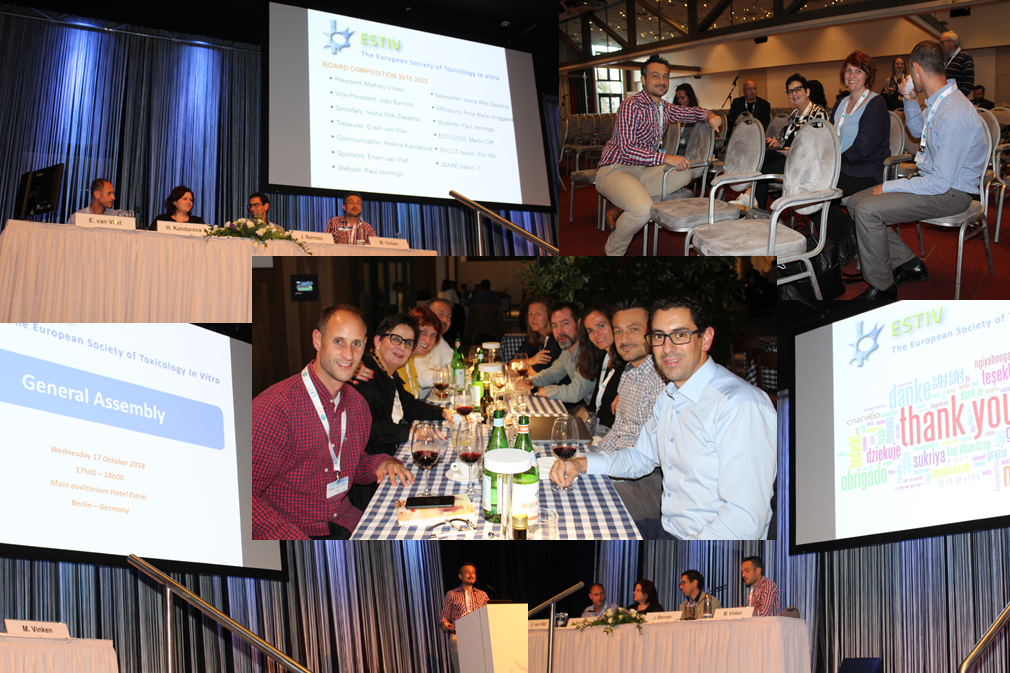
2018: Berlin, Germany2020: Sitges, Spain (postponed to 2022 due to COVID)
2022: Sitges, Spain
2024: Prague, Czech Republic
2026: Maastricht, the Netherlands